Future of Mobility 2026 | AI, Autonomous Vehicles & Industry Trends

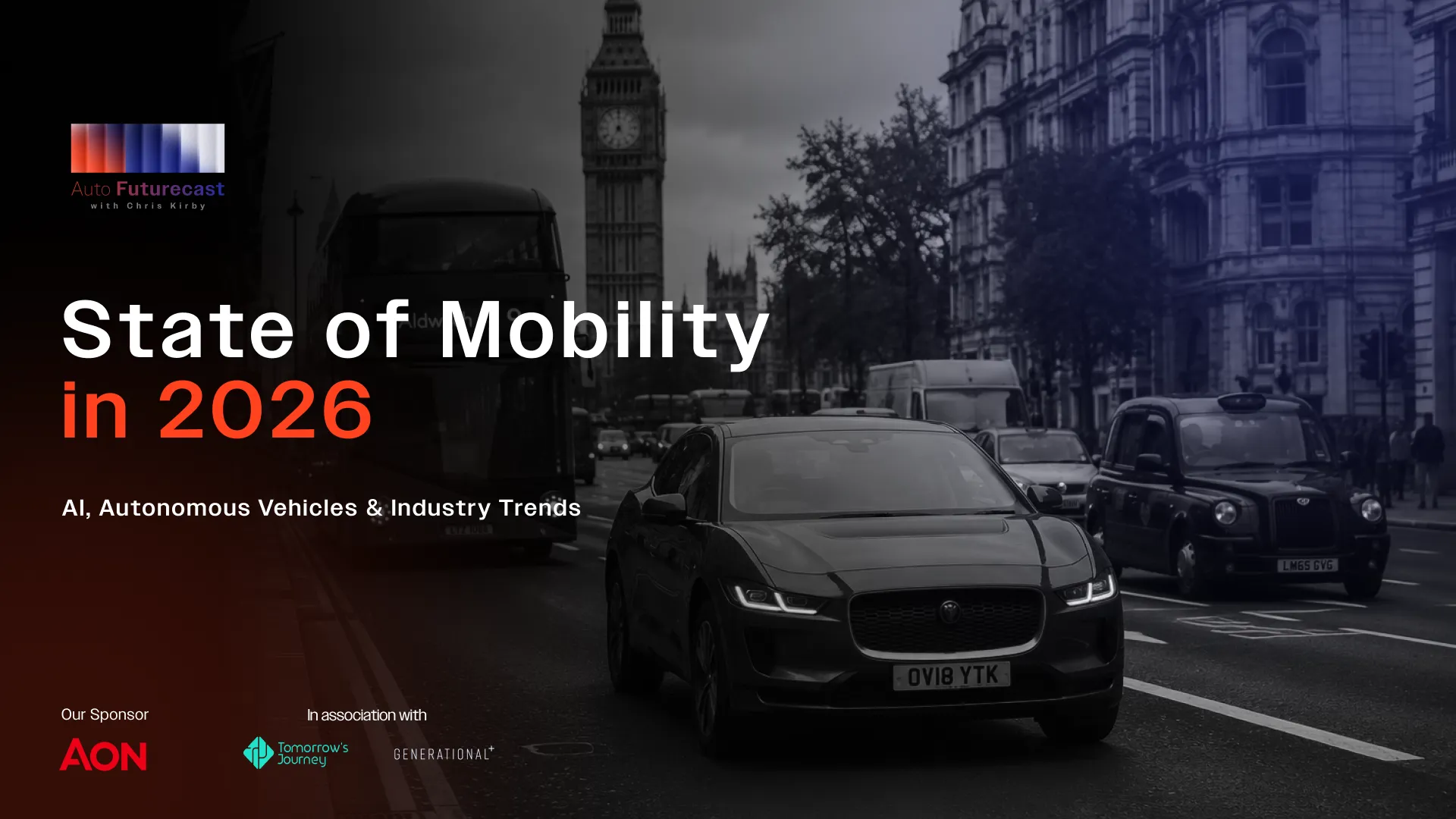
As we launch Season 2 of Auto Futurecast, one question stood out above all others: what does the Future of Mobility 2026 really look like? Not the version driven by headlines or hype, but the one shaped by real-world investment, technology adoption, and changing customer expectations.
The Future of Mobility 2026 is being defined by rapid advances in Autonomous Vehicles, AI in Automotive, and new business models that are transforming how people move and how businesses operate. From fleet operators and dealerships to OEMs and mobility providers, every part of the ecosystem is adapting to a more connected, technology-driven future.
To explore these changes, Chris Kirby sat down with mobility strategist Lukas Neckermann in the opening episode of Season 2. Drawing on years of experience across OEMs, fleet operators, startups and mobility innovators, Neckermann shared practical insights into the Automotive Industry Trends shaping the years ahead.
The discussion highlighted three key themes every mobility leader should understand: autonomous mobility is entering a new stage of maturity, AI is creating measurable operational value today, and the Future of Dealerships may be far stronger than many expected.
What Is Driving the Future of Mobility 2026?
Few industries have evolved as quickly as automotive and mobility over the past decade. Autonomous vehicles have progressed from futuristic concepts to commercial pilot programmes, artificial intelligence is becoming embedded in everyday operations, and new mobility businesses continue to reshape customer expectations.
These Automotive Industry Trends are changing how organisations deliver services, manage fleets and generate revenue. Rather than focusing on one breakthrough technology, the Future of Mobility 2026 is being driven by the combination of digital innovation, operational excellence and customer-centric business models.
The Rise of Autonomous Vehicles
For much of the last decade, Autonomous Vehicles have occupied a unique position. Expectations were often set unrealistically high, leading many to believe progress had stalled when widespread adoption failed to arrive.
In reality, the industry has been solving the hardest problems. As Neckermann explains, developing the technology is only part of the challenge. Ensuring safety, reliability, commercial viability and public trust is what ultimately determines success.
Europe presents an especially complex environment for autonomous mobility. Cities like London, with dense traffic, cyclists, pedestrians and intricate road networks, create real-world testing conditions that go far beyond controlled demonstrations. Success in these environments could become the blueprint for wider European deployment.
Perhaps the biggest difference between regions is the objective. In North America, autonomous programmes have largely focused on robotaxis. In Europe, Autonomous Vehicles are increasingly viewed as a way to strengthen public transport, improve accessibility and connect underserved communities.
How AI in Automotive Is Reshaping Customer Experience and Operations
While discussions around artificial intelligence often focus on dramatic disruption, the biggest impact of AI in Automotive is already happening through everyday operational improvements.
Service scheduling, workshop management, fleet planning, customer communication and vehicle recommendations all benefit from AI-powered automation. Customers increasingly expect businesses to deliver faster responses, personalised experiences and frictionless interactions. AI helps organisations meet those expectations while improving operational efficiency.
The companies seeing the greatest results aren't necessarily those using the newest AI tools. They're the businesses asking better questions, creating better processes and integrating AI into existing workflows. In many ways, AI in Automotive is becoming a competitive advantage through operational discipline rather than technology alone.
Top Automotive Industry Trends to Watch in 2026
Several Automotive Industry Trends are shaping the Future of Mobility 2026:
- Autonomous mobility moving from pilot projects to scalable commercial operations.
- Artificial intelligence improving operational efficiency across dealerships, fleets and mobility providers.
- Subscription models and Mobility-as-a-Service expanding customer choice.
- Connected vehicles generating valuable operational insights.
- Electrification continuing to influence infrastructure investment.
- Traditional dealerships evolving into long-term mobility service providers.
Together, these trends demonstrate that innovation is no longer limited to vehicle technology. It is transforming the entire mobility ecosystem.
The Future of Dealerships in an AI-Driven World
For years, many predicted that digital retailing and direct-to-consumer sales would reduce the importance of dealerships. However, the Future of Dealerships appears to be heading in a very different direction.
Dealerships already possess valuable assets that emerging mobility models depend on. They have trusted customer relationships, physical infrastructure, servicing expertise and operational experience managing vehicles at scale.
As mobility continues to evolve, these strengths become increasingly valuable. Subscription services, EV charging support, fleet management and autonomous vehicle servicing all require capabilities that many dealerships already possess.
Rather than simply selling vehicles, the Future of Dealerships is about becoming long-term mobility partners that support customers throughout their ownership and mobility journey.
Mobility Innovation Is Creating New Revenue Opportunities
One of the biggest lessons from the conversation is that Mobility Innovation extends well beyond technology.
Every autonomous fleet requires maintenance, charging, cleaning, monitoring and repositioning. Every mobility provider needs systems that maximise utilisation while reducing downtime. This creates entirely new commercial opportunities for businesses that already understand fleet operations.
Mobility Innovation is also enabling dealerships, rental companies and fleet operators to expand into subscription services, Mobility-as-a-Service, connected vehicle support and other recurring revenue models that strengthen customer relationships over time.
The businesses that succeed won't simply adopt new technology. They'll combine innovation with operational excellence.
What Businesses Should Do to Prepare for the Future of Mobility 2026
Preparing for the Future of Mobility 2026 requires more than investing in new technologies.
Businesses should focus on building operational capabilities that support AI adoption, autonomous mobility and connected customer experiences. Organisations that combine digital innovation with trusted relationships, efficient operations and scalable business models will be best positioned for long-term success.
Instead of viewing AI, autonomous vehicles and new mobility services as separate initiatives, leaders should create integrated strategies that connect technology, operations and customer value.